Source:www.baoanone.com
Bineogen is dedicated to providing efficient, precise, and intelligent imaging solutions for global researchers
Nowadays, global brain science is developing rapidly. Global brain science research is moving towards the critical stage of "mesoscopic scale whole-brain analysis"—mapping neural atlases is the core breakthrough for solving the mysteries of the brain and promoting neurological disease research and brain-inspired intelligence development, but the scientific research community has long faced a "dilemma": needing to observe every "small and precise" neuron in the brain while also being able to analyze the "broad and extensive" projections between neurons, yet lacking corresponding solutions.
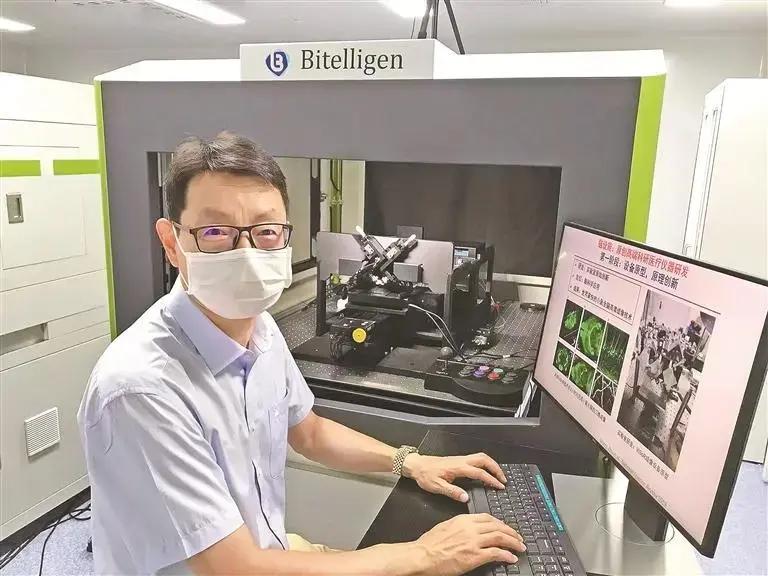
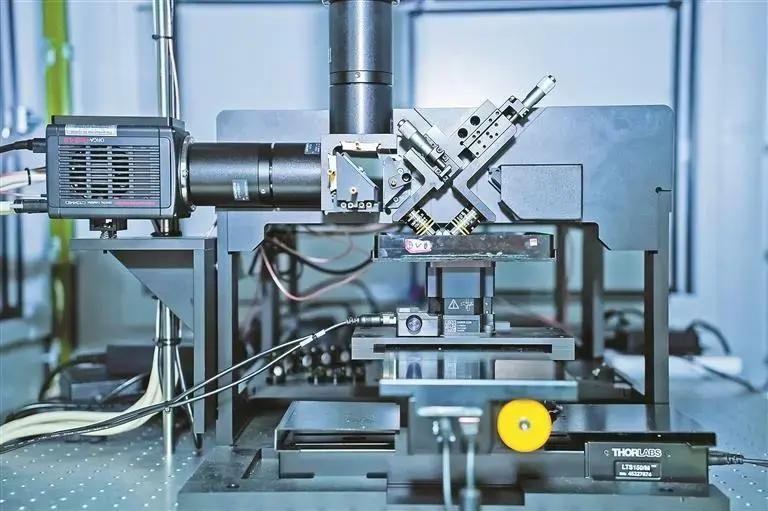
On January 11th, reporters learned through interviews that there is a high-tech company in Guangming District seeking "breakthrough answers" for scientific research pain points—Shenzhen Bineogen Technology Co., Ltd. (referred to as "Bineogen"). Established on January 8, 2024, Bineogen is a high-tech platform company focusing on biomedical microscopic imaging and big data analysis, dedicated to providing efficient, precise, and intelligent imaging solutions for global researchers. Relying on VISoR multi-dimensional synchronous flying scanning fluorescence microscopy technology, combined with advanced tissue clearing and data analysis technologies, the company creates an industry-leading microscopic imaging and data processing platform.
It is especially worth mentioning that the core team members of Bineogen realized that technological breakthroughs in the laboratory can only truly accelerate brain science progress when transformed into services that researchers "can use and find easy to use". Coinciding with the accelerated promotion of the national brain science strategy and the explosive growth of scientific research demand, the company team, carrying core technologies such as "tissue clearing" and "fast microscopic imaging" that have already been broken through, decisively chose to start a business—not for pure commercial value, but hoping to build a bridge of "technology-research", using a set of standardized, high-efficiency full-process solutions to help researchers save time on "coordinating technology and repeated trial and error", enabling them to focus on core research. This is both the implementation of technological value and a response to the needs of the national brain science strategy. Therefore, the company has established a full-process solution for brain science mesoscopic atlas analysis ranging from sample processing to 3D fluorescence microscopic imaging and then to whole-brain data analysis. Customers can not only entrust the company with full-process services but also choose to join from any link therein.
Long-termism
Over ten years of industry experience
On January 11th, reporters visited Bineogen at the Shenzhen Brain Science and Technology Innovation Center in Xinhu Subdistrict, Guangming District, to learn about the company's R&D, technology, production, sales, and planning.
It is understood that the core team members of Bineogen are strong, with an average of over 10 years of experience in scientific and technological achievement transformation and high-tech enterprise management, deeply cultivating the field of technology transfer, and combining academic background with enterprise management experience. The business of Bineogen originates from the world-leading brain imaging technology developed by the team of Guoqiang Bi, an internationally renowned biophysicist and neurobiologist, Distinugished Chair Professor at Shenzhen University of Advanced Technology, and Director of the Center for Brain Science at the Shenzhen Institute of Advanced Technology, Chinese Academy of Sciences. The company's CEO, Kai Wu, graduated from the Department of Physics of Peking University, served as the Director of the Electronics and Information Center of the Beijing Institute of Collaborative Innovation, worked in management at EPSON and ABB, and is currently mainly responsible for the industrialization of VISoR technology. The company's CTO, Lufeng Ding, holds a bachelor's degree in physics and a master's degree in biophysics from the University of Science and Technology of China, has rich experience and a profound professional background in the field of brain science imaging, has participated in major scientific research projects such as the "Brain Functional Connectome" of the Chinese Academy of Sciences, participated in the development of VISoR high-speed 3D fluorescence imaging technology, and obtained relevant patents.
Kai Wu told reporters, "The company team is not only good at planning the direction of technical service iteration with academic insight, but also can control operating efficiency by building a standardized operation system, effectively promoting the commercial implementation of technology. It is precisely this combination of abilities 'understanding technology, knowing operations, and capable of market expansion' that allows the team to effectively avoid the common pain points of technology-based enterprises such as 'emphasizing R&D over market' and 'having technology without implementation', continuously promoting the transformation of company technology from 'research-grade results' to 'scalable commercial services', providing stable and efficient decision-making and execution support for the company's transition from startup to growth stage."
Profound perception
Choosing Guangming for Entrepreneurship to Promote Industry Development
In the interview, reporters learned that Kai Wu, originating from his profound perception and firm belief in the "pain points" of brain science research, led the team members to choose the path of entrepreneurship.
Why choose to settle in Guangming Brain Science Industry Innovation Center?
Kai Wu stated that choosing to take root in the Guangming Brain Science Industry Innovation Center was not accidental, but after comparative research, identified as the "optimal solution"—here lies a "brain science innovation ecology" that other regions cannot replicate, perfectly matching the company's needs for "fast technology transformation, optimal operating costs, and high collaboration efficiency".
First, the ecology is unique, supporting technology implementation throughout the entire chain. Guangming Science City's "university institutes + facility installations + parks + industry + finance + talent" six-in-one mechanism is not a simple superposition of policies, but truly clears the blockage of "research-industry". As a world-leading scientific research platform, the Brain Innovation Center provides a world-class experimental environment and has built a closed loop of "technology R&D - experimental verification - industrial transformation": The company and the Shenzhen Institute of Advanced Technology of the Chinese Academy of Sciences have jointly built a joint laboratory, making communication between the company and scientists more convenient, allowing fewer detours, and transforming the most advanced frontline scientific research results into industry with extremely high efficiency, greatly shortening the transformation cycle, accelerating the promotion and helping scientific research move to a higher level.
Secondly, resource sharing reduces costs, allowing startups to travel light. For technology-driven startups, the biggest cost pressure comes from high-end equipment and laboratory space. The shared equipment platform of the Brain Innovation Center opens up a full set of facilities from fluorescence microscopes to data storage services, coupled with Guangming District's innovative mechanism of "facility sharing + policy empowerment", further reducing the operational threshold and allowing the company to concentrate funds on core technology iteration.
Finally, strategic alignment is high, growing together with the city. Guangming Science City's goal to "build a highland for brain science industry innovation" is completely consistent with the company's direction of "serving the national brain science strategy". Here gathers the nation's top brain science research teams, large-scale scientific facilities, and upstream and downstream enterprises in the industrial chain. The company can not only quickly connect with customers but also efficiently link with peers and upstream/downstream institutions, forming a synergistic growth effect of complementary resources and co-created value.
"It can be said that Guangming didn't just give 'a site', but paved a 'highway for technology transformation'. In the future, we will continue to take root here, accelerate growth on this soil, help researchers 'see the details of the brain clearly', and also 'see the future of the brain science industry clearly' together with Guangming," said Kai Wu.
Focusing on pain points
Solving the "four difficulties" long faced by the industry
Only by solving industry pain points can one stand out in the industry.
Kai Wu stated that the company's core project is a full-process intelligent solution built around "brain imaging and brain atlas analysis"—not a single technology or product, but a complete system covering "sample processing → 3D imaging → data analysis → software support → cross-domain application", precisely solving the industry pain points of "technological fragmentation, low efficiency, difficult value conversion" in brain science research, while extending to multi-field biomedical research, forming a business layout of "brain science as the core, empowering multiple scenarios".
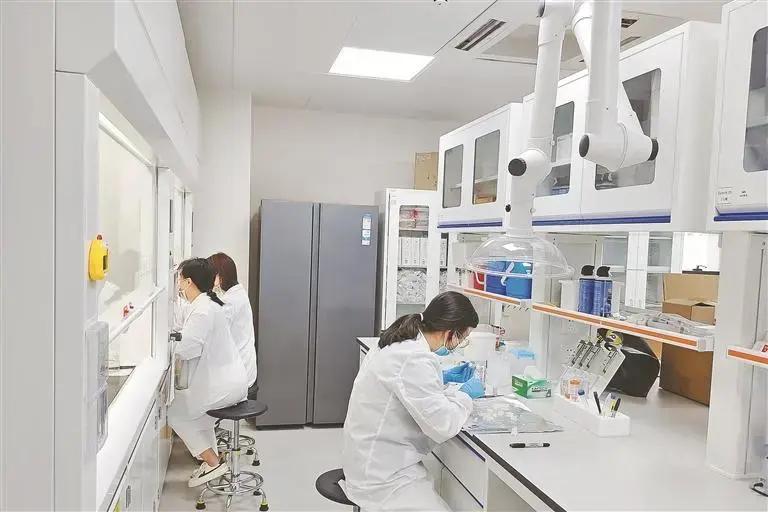
When discussing whether the technology is "advanced or not", Kai Wu believes that the company's core technology, VISoR multi-dimensional synchronous flying scanning fluorescence microscopy technology, is a benchmark breakthrough in the global mesoscopic brain imaging field. Its advanced nature is reflected in three hard indicators: First, leading efficiency—breaking the bottleneck of "precision and speed cannot be achieved simultaneously" in traditional microscopy technology, compressing the mouse whole-brain imaging cycle to half an hour, achieving both "high precision + high throughput"; Second, high degree of intelligence—supporting self-developed AI algorithms and high-performance computing clusters, automated processing of TB-level whole-brain data, developing customized data analysis software; Third, full-process closed-loop capability—unlike fragmented services in the industry that "only do imaging" or "only do analysis", the company achieves full-process service from sample clearing treatment (self-developed adaptive reagents) to imaging and data analysis, with data consistency, validity, and reliability far exceeding the industry average.
What Kai Wu feels proud of is that the core industry pain points solved by Bineogen are exactly the "four difficulties" long faced by the scientific research community: first, "fragmented technology difficult to integrate"—researchers do not need to coordinate multiple institutions for imaging and analysis, obtaining complete data in one stop; second, "low efficiency and long cycle"—VISoR technology and AI tools significantly compress imaging and analysis time; third, "difficult to mine data value"—customized software helps researchers extract valid conclusions from massive data; fourth, "high cost and high threshold"—shared equipment and standardized services lower the usage threshold for small and medium-sized laboratories.
Facing future challenges, what are the development plans?
Kai Wu told reporters that the company already possesses the foundation of technology, data, and industry resources. In the future, focusing on "product iteration + capability supplementation", it will continue to absorb more professional talents, expand the core team size, and enrich the "research + technology + operation" three-dimensional team structure; at the same time, prepare to launch clearing reagent kits, and continue to promote efficient, professional, high-quality imaging service products and diverse data analysis products, continuing to develop well and serve customers well.
Guangming News All-media Reporter Juntao Li (Text/Photo)
Editor Jun Xie